The much-awaited medical entrance examination, NEET UG 2026, has already been over. Around 20 lakhs aspirants gave their best on 21st June and are now comparatively relaxed. There were many issues involved in this time around the exam. Firstly, the paper leaked, and students faced hard consequences. They have to appear for a re-exam. However, it can be hoped that the exam was good for those who prepared well.
Students and parents are certainly now feeling a bit confused about next steps after NEET 2026. This is a crucial phase in terms of planning your career ahead. Scoring a good rank or mark is as important as availing the NEET UG 2026 counselling preparation guide. If you can plan this time well, it will surely help you navigate your future and make informed decisions as well.
In this blog, we will explore the top 5 essential things students must do after the NEET UG 2026 exam.
1. Take a Short Break
The journey to the re-exam on June 21st has been an emotional and exhausting rollercoaster for students and parents. Having to restart your prep when the May exam was cancelled took a lot of mental resilience. Now that the paper is finally over, your first step is to put down the books and walk away.
Experience a total mental disconnect for a minimum of 48 to 72 hours. Spend quality time with your family, sleep well, watch a movie, or pick up a hobby you put aside during revision. You need to give your brain time to recover from exam burnout and post-exam anxiety before you go into strategic planning mode.
2. Estimate Your Score
When your mind is fresh, it is time to face the numbers. You can calculate your expected marks based on the OMR sheet response and the official provisional answer key, once released by the National Testing Agency (NTA). Meanwhile, you can calculate your expected marks based on the answer keys published by premium coaching institutes.
Keep the official marking scheme in mind:
Preliminary student feedback suggests that Biology was accessible, but the Physics section was long and a lot tougher this time around. If your score seems a bit low in comparison to your mocks, don’t panic. Remember that a tougher paper generally impacts the overall cut-off ranks across the board. Use online rank predictors and input your calculated marks to get a rough idea of where you are likely to be placed.
3. Gather Crucial Documents
The time gap between the declaration of NEET results and the start of medical counselling is generally very short. Losing one document could cost you a seat, so take this free time to create a foolproof physical and digital folder.
Start organizing the following mandatory documents right now:
4. Understand the Counselling Process
There is no single platform for medical admissions in India. It is important to know the structure of the counselling authorities so that you do not miss out on important registration deadlines. Admissions are divided into two large segments:
Research how different rounds (Round 1, Round 2, Round 3, and Stray Vacancy rounds) operate, and look into the previous year's closing ranks for your target colleges to map out a realistic choice-filling strategy.
5. Explore Backup and Alternative Options
The stark fact is that there are more than 20 lakh aspirants trying for a limited number of government MBBS seats, and not all can clear the cut-off. But a lower NEET score is not the end of your healthcare career.
Open your horizons and actively look for great alternative pathways:
Final Thought:
NEET UG 2026 cycle has surely tried your patience and dedication as no other batch has. But the storm is over, and you have crossed the finish line of the examination hall successfully.
Now that you have done the hard work of writing the paper, the smart work of planning your admission journey begins. Be proud of the resilience you have shown by coming for the re-test, keep your analytical checklists handy, and approach the upcoming counselling season with an informed, calm, and open mind. Healthcare careers are waiting for YOU!
About Pice Educare:
Pice Educare is a certified MBBS Consultancy & Admissions Support company based in Kolkata, established in 2010. The company helps students secure MBBS admissions in India and abroad, including Bangladesh, Russia, Georgia, and Kazakhstan.
Pice Educare offers expert guidance in Career Counselling, NEET UG/PG Counselling, Global University Selection, Documentation, and complete admission support. Basiruddin Shaikh leads the company.
About the Author:
Sangeeta Bhattacharya is a passionate content writer & strategist with a keen interest in education, career guidance, branding, and social awareness. She specializes in creating engaging and meaningful content that informs, inspires, and connects with readers. Follow Sangeeta on LinkedIn
FAQ
Q1: What should I do immediately after the NEET 2026 exam?
A: Take a complete mental break for 2 to 3 days to recover from exam burnout. Once refreshed, use reliable answer keys to estimate your score, gather your mandatory academic and category documents, and research the upcoming counselling process.
Q2: What documents are mandatory for NEET UG 2026 counselling?
A: You will need your NEET 2026 Admit Card, Scorecard, Class 10 and 12 mark sheets/certificates, a valid government ID (like Aadhaar), category or domicile certificates (if applicable), and 8–10 passport-size photographs matching your application form.
Q3: What is the difference between AIQ and State Quota counselling?
A: All India Quota (AIQ) counselling covers 15% of government medical seats nationwide and is managed by the MCC for all eligible candidates. State Quota counselling covers the remaining 85% of seats and is managed by individual state authorities for candidates meeting specific domicile criteria.
Q4: What are the best career options if my NEET score is low?
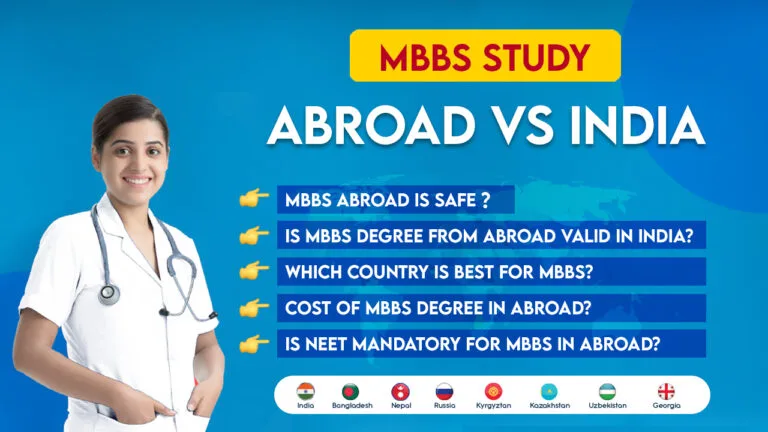
A: If you miss the government MBBS cutoff, you can explore allied medical fields like BDS (Dental), BAMS (Ayurveda), BHMS (Homeopathy), BPT (Physiotherapy), or B.Sc. Nursing. Alternatively, you can pursue an affordable MBBS degree from recognized medical universities abroad.




















.webp)
















.webp)

.webp)







.webp)


.webp)